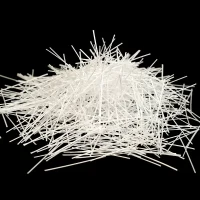
Steel fiber vs. PP macrofiber for concrete floors is an important consideration for construction contractors, engineers, and concrete producers. Both materials improve concrete performance, but they differ in stiffness, corrosion resistance, weight, and post-cracking behavior.
Steel fibers are commonly used in heavy-duty industrial floors and concrete structures requiring high residual flexural performance. Polypropylene (PP) macrofibers offer a lightweight, corrosion-resistant alternative for suitable concrete flooring applications.
Which option is better? The answer depends on loading conditions, project specifications, environmental exposure, and budget.
What Are Steel Fibers and PP Macrofibers?
Steel Fiber for Concrete Floors
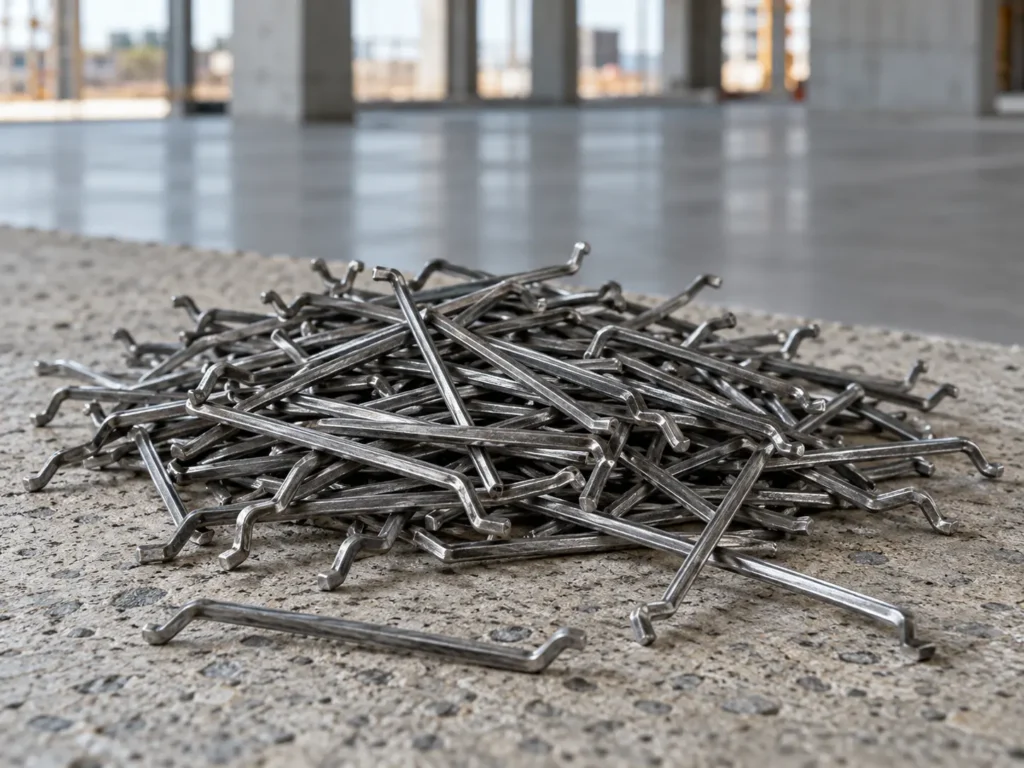
Steel fibers are short steel elements mixed throughout concrete to create distributed reinforcement. Common designs include hooked-end, straight, and other geometrically modified fibers.
Their relatively high elastic modulus helps them transfer stress across cracks after concrete begins to fracture. Depending on the fiber geometry, dosage, and concrete mix, steel fibers can improve residual flexural strength, toughness, and resistance to impact and fatigue.
Steel fiber reinforced concrete is commonly considered for:
- Industrial warehouse floors
- Heavy-duty manufacturing floors
- Logistics and distribution centers
- Concrete pavements
- Precast concrete components
- Selected shotcrete applications
PP Macrofiber for Concrete Floors

PP macrofibers are engineered synthetic fibers made from polypropylene. Their length, shape, surface texture, and anchoring characteristics are designed to improve bonding and reinforcement performance within the concrete matrix.
Unlike conventional polypropylene microfibers, which are primarily used to help control plastic shrinkage cracking, PP macrofibers can provide post-cracking reinforcement when properly designed and dosed.
Common applications include:
- Industrial and commercial concrete floors
- Concrete pavements and external slabs
- Selected precast concrete products
- Shotcrete and underground construction
- Concrete slabs where corrosion resistance is important
Not all PP fibers have the same mechanical properties. Microfibers and macrofibers serve different purposes, so the product type must match the intended application.
Steel Fiber vs. PP Macrofiber: Key Differences
The following table summarizes the main differences between these two concrete reinforcement materials.
| Comparison Factor | Fibra de acero | PP Macrofibra |
|---|---|---|
| Material | Acero | Polypropylene polymer |
| Elastic modulus | Generally higher | Generally lower |
| Densidad | Alta | Low |
| Post-cracking performance | Can provide high residual flexural capacity | Can provide significant residual performance when properly designed |
| Resistencia a la corrosión | Requires consideration of exposure and surface conditions | Does not rust or corrode |
| Reinforcement weight | Higher | Lower |
| Handling | May require attention to sharp edges and fiber exposure | Generally easier to handle |
| Mixing and finishing | Depends on fiber geometry and dosage | Depends on fiber geometry, dosage, and surface characteristics |
| Typical applications | Heavy-duty floors, industrial slabs, selected structural applications | Industrial floors, pavements, and applications requiring corrosion-resistant reinforcement |
| Selection criteria | Design loads, residual strength, exposure, and specifications | Residual strength, crack control, exposure, and specifications |
These are general material characteristics. The actual performance of a fiber-reinforced concrete mixture depends on the specific product, dosage, concrete composition, mixing process, and testing results.
Strength and Load-Bearing Performance
Strength is a major factor when selecting reinforcement for concrete floors.
Fibras de acero have a high elastic modulus and can provide effective crack bridging and residual flexural performance. They are often considered for industrial floors exposed to heavy wheel loads, concentrated loads, or repeated traffic.
Macrofibras de PP can also improve post-cracking performance when properly designed and dosed. However, their lower stiffness means that they should not automatically be considered equivalent to steel fibers at the same dosage.
The correct comparison is the performance of the complete concrete mixture, not simply the tensile strength of individual fibers.
For early-age plastic shrinkage control, conventional PP microfibers are often more appropriate than macrofibers alone. For hardened concrete, steel fibers and PP macrofibers can both contribute to crack bridging and toughness.
Joint design, curing, slab thickness, and subgrade conditions remain essential for effective crack management.
Durability and Installation
Durabilidad
Steel fibers provide durable reinforcement, but corrosion should be evaluated according to exposure conditions and surface requirements. In aggressive environments, moisture and chloride exposure may require particular attention.
PP macrofibers do not rust or corrode, making them attractive for projects where corrosion resistance is important. Their low density also reduces the weight of reinforcement materials transported and handled on site.
However, overall concrete durability still depends on mix design, curing, exposure conditions, and construction quality.
Workability and Finishing
Both fiber types require proper mixing and dispersion.
Steel fibers may affect workability and surface finishing depending on their geometry and dosage. Exposed fibers can also be a consideration for floors requiring special coatings or surface finishes.
PP macrofibers are lightweight and convenient to handle, but unsuitable dosage or poor dispersion can cause clumping or visible fibers at the surface.
To achieve consistent results:
- Follow the manufacturer’s recommended addition procedure.
- Verify mixing time and fiber dispersion.
- Conduct trial batches before large-scale placement.
- Avoid adding excess water to compensate for reduced workability.
- Check finishing requirements before selecting a fiber system.
Which Fiber Is More Cost-Effective?
The lowest price per kilogram does not necessarily mean the lowest overall project cost.
Steel fibers have a higher density, while PP macrofibers are much lighter. However, their dosages cannot be compared directly by weight because their mechanical properties and reinforcement behavior differ.
A practical cost comparison should consider:
- Fiber price and required dosage
- Required residual flexural performance
- Transportation and handling
- Mixing and finishing requirements
- Maintenance and service-life considerations
- Project-specific reinforcement design
Steel fibers may be suitable when the required residual performance justifies their use. PP macrofibers may offer advantages when corrosion resistance and reduced reinforcement weight are important.
Compare the cost of concrete that meets the required performance specifications, rather than comparing fiber prices alone.
How to Choose the Right Fiber for Concrete Floors
| Project Requirement | Option to Evaluate |
|---|---|
| Suelos industriales resistentes | Steel fiber or a qualified macrofiber system |
| High residual flexural performance | Compare verified performance test results |
| Corrosion-sensitive environments | PP macrofiber |
| Reduced reinforcement material weight | PP macrofiber |
| Early-age plastic shrinkage control | PP microfiber, where appropriate |
| Replacement of conventional reinforcement | Engineering assessment and applicable approvals required |
Neither material is universally better. The final selection must meet the project’s loading, serviceability, durability, and design requirements.
For structural slabs or applications with demanding loads, a qualified engineer should confirm the suitability of the proposed reinforcement system. Fibers should not be assumed to replace conventional reinforcement without appropriate design and approval.
Why Choose Fiberego for Concrete Fiber Solutions?
Selecting the right concrete fiber involves more than comparing prices. Product geometry, technical specifications, application requirements, and verified performance all matter.
Fiberego offers concrete fiber solutions for different construction applications, including steel fibers and synthetic polypropylene fibers.
When evaluating a product, consider:
- Fiber type, length, and geometry
- Required residual flexural performance
- Concrete mix and loading conditions
- Exposure environment and finishing requirements
- Technical data and applicable standards
Looking for a Reliable Concrete Fiber Manufacturer?
Explore Fiberego’s steel fiber and PP macrofiber products to identify a suitable reinforcement solution for your project. Contact the Fiberego team for product specifications and technical support.

Preguntas frecuentes
1. Is steel fiber better than PP macrofiber for concrete floors?
Not always. Steel fibers offer high stiffness and can provide high residual flexural performance. PP macrofibers offer corrosion resistance and lower reinforcement weight. The better choice depends on project requirements and verified test results.
2. Can PP macrofibers replace steel fibers?
In selected applications, an engineered PP macrofiber system may replace steel fiber reinforcement. The decision requires appropriate design calculations, performance testing, and compliance with applicable standards.
3. Do concrete fibers eliminate cracking?
No. Fibers can help control cracks and improve post-cracking behavior, but they cannot eliminate all cracking. Curing, joint design, shrinkage, and subgrade conditions remain important.
4. What is the difference between PP microfibers and macrofibers?
Microfibras de PP are primarily used for plastic shrinkage crack control. Macrofibras de PP are designed to provide additional post-cracking reinforcement and toughness in hardened concrete.
5. How do I determine the correct fiber dosage?
Dosage depends on fiber characteristics, concrete composition, loading conditions, and required performance. Follow manufacturer recommendations and verify the mixture through appropriate testing.