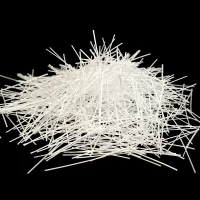
Concrete is renowned for its impressive compressive strength, but its natural vulnerability lies in its low tensile strength. Left unreinforced, concrete is susceptible to cracking under pressure, temperature fluctuations, and ground movement. For decades, traditional welded wire mesh was the industry standard. Today, concrete fiber reinforcement has emerged as a highly efficient, cost-effective alternative.
As a global leader in high-performance concrete reinforcement, フィベレゴ frequently helps contractors, engineers, and builders navigate these material choices. If you are planning a concrete pour, understanding the differences between concrete fiber mesh vs. wire mesh is crucial for maximizing durability, controlling costs, and optimizing labor.
The Importance of Concrete Reinforcement
As concrete cures and releases moisture, it naturally shrinks. Without proper reinforcement, this plastic shrinkage leads to visible surface cracks and compromised structural integrity. Reinforcement materials hold the concrete matrix together, significantly improving its flexural strength, impact resistance, and ability to distribute loads evenly across the slab.
What is Wire Mesh in Concrete?
Welded wire mesh (or welded wire fabric) consists of a grid of steel wires welded together at their intersections. It is typically delivered to the job site in heavy rolls or rigid sheets.
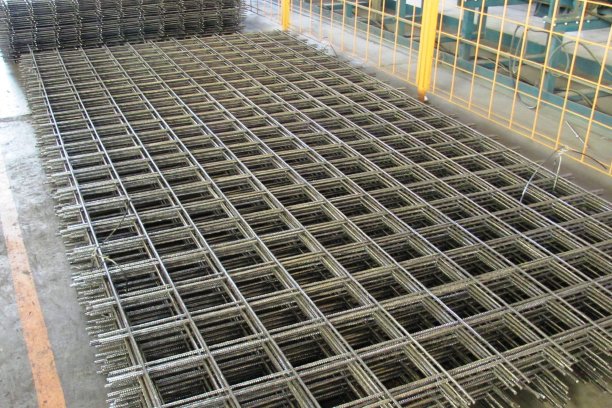
During installation, the wire mesh is placed over the subgrade. As the concrete is poured, the mesh must be strategically positioned (usually using chairs or spacers) so it sits precisely in the middle or upper third of the slab. Its primary function is to hold the concrete together after a crack has already occurred, preventing the fissure from widening.
Pros & Cons of Traditional Wire Mesh
Advantages:
- Structural Support: Provides familiar heavy-duty reinforcement for thick structural slabs.
- Grid Consistency: Welded joints ensure the spacing of the steel reinforcement remains uniform—if placed correctly.
Disadvantages:
- Labor-Intensive: Unrolling, cutting, detangling, and tying wire mesh requires significant time, manpower, and safety precautions.
- Placement Errors: If the mesh gets stepped on during the pour and sinks to the bottom of the slab, its reinforcing value drops to zero.
- Corrosion Risk: Over time, moisture penetration causes the steel wires to rust, leading to internal expansion and concrete spalling.
What is Concrete Fiber Mesh?
Fiber mesh takes a fundamentally different, highly engineered approach. Instead of laying down a single, two-dimensional physical grid, thousands of high-performance fibers are added directly into the concrete or mortar mixer.
This creates a three-dimensional, omnidirectional reinforcement system evenly distributed throughout the entire concrete batch. Depending on your project requirements, Fiberego engineers specific types of fibers to tackle different challenges:
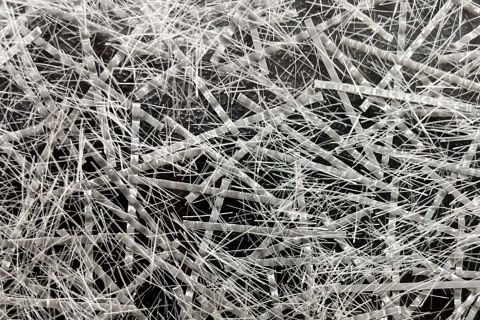
- Microfibers (e.g., Fiberego Monofilament & Fibrillated PP Fibers): These ultra-thin synthetic fibers are designed primarily to prevent early-stage plastic shrinkage cracks while the concrete is still wet and curing. They drastically improve the concrete’s cohesiveness and surface abrasion resistance.
- Macrofibers (e.g., Fiberego Synthetic PP Macrofibers): These are thicker, embossed or twisted fibers that provide enhanced load-bearing capacity and impact resistance. They serve as a highly effective, direct replacement for standard wire mesh in many commercial flatwork applications.
- スチールファイバー (e.g., Fiberego Hooked End & Corrugated Steel Fibers): For industrial projects requiring extreme load-bearing capabilities, steel fibers offer ultimate tensile strength and structure ductility, often eliminating the need for traditional rebar matrices entirely.

Pros of Fiber Reinforcement
- Ultimate Durability & Zero Corrosion: Premium synthetic fibers resist acids, alkalis, and chlorides, ensuring long-term durability even in harsh marine or industrial environments.
- Massive Time and Cost Savings: By eliminating the need to measure, cut, and place heavy wire rolls, labor costs are slashed, and project timelines are significantly accelerated.
- 3D Reinforcement: Unlike a single layer of wire, fibers protect the concrete from top to bottom, increasing overall shatter resistance and reducing the lifecycle maintenance costs of the structure.
Head-to-Head Comparison: Fiber vs. Wire
| Feature | Wire Mesh | Fiberego Concrete Fibers |
|---|---|---|
| 補強タイプ | 2D Single-plane grid | 3D Omnidirectional distribution |
| Installation Speed | Slow (requires manual placement) | Fast (mixed directly into the batch) |
| Corrosion Risk | High (steel rusts over time) | Zero (for synthetic), Highly resistant (for engineered steel fibers) |
| Primary Function | Holds cracks together after they form | Prevents micro-cracks from forming entirely |
| Cost Profile | High material, transport & labor costs | Highly cost-efficient, lowers total project ROI |
When to Use Which?
When to Choose Wire Mesh
Wire mesh is traditionally used for heavy-duty, suspended structural applications. If you are pouring concrete that requires specific structural engineering codes where high-yield steel grids are mandated, wire mesh remains a standard choice.
When to Choose Concrete Fibers
Concrete fibers are the superior, cost-saving choice for standard horizontal flatwork, residential, commercial, and extreme-environment projects. You should opt for Fiberego’s advanced fiber solutions when working on:
- Industrial flooring and warehouse slabs
- Driveways, sidewalks, curbs, and patios
- Precast concrete elements and tunnels
- Overlay systems and mortar applications
Why Top Contractors Partner with Fiberego
Choosing the right reinforcement isn’t just about the material; it’s about the expertise behind it.
で フィベレゴ, we don’t just supply materials—we provide end-to-end engineering solutions. Our high-performance fibers have been trusted in world-class mega-infrastructure projects, including the Three Gorges Dam and the Lhasa River Grand Bridge on the Qinghai-Tibet Railway. We stand out by offering:
- Tailored Solutions: Customized fiber lengths, types, and dosing recommendations for your specific mix design.
- Technical Support: Expert assistance with concrete mix design and on-site application guidance.
- Global Delivery: A robust global logistics network ensuring on-time delivery, anywhere in the world.
結論
Both concrete fiber mesh and wire mesh serve vital roles in modern construction. However, fiber reinforcement has revolutionized the industry by offering a faster, safer, and more durable way to control cracking and boost structural integrity.
When you are ready to upgrade your concrete mix, reduce labor costs, and build structures that last generations, partner with the experts. Contact the Fiberego team today to discuss your next project and discover the perfect customized fiber solution.