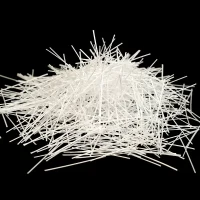
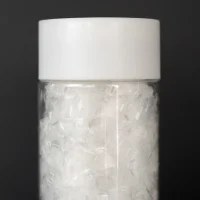
Steel fiber vs. synthetic macrofiber is an important comparison when selecting reinforcement for concrete floors, pavements, shotcrete, and other construction applications. Both fiber types can improve post-cracking behavior, but they differ in stiffness, density, corrosion characteristics, and reinforcement mechanisms.
Steel fibers are metallic reinforcement elements commonly selected for their mechanical properties and anchorage. Synthetic macrofibers, often made from polypropylene, provide a non-metallic alternative that can deliver post-cracking performance in suitable concrete systems.
The best choice depends on the required residual strength, exposure conditions, concrete mix, and project specifications—not simply the fiber material or dosage.
What Is Steel Fiber?
Steel fiber is a short, discrete steel element mixed into concrete to improve selected mechanical properties. Common designs include hooked-end and crimped fibers, whose geometry helps transfer stresses between the fiber and surrounding concrete.
When cracks develop, steel fibers can bridge the cracks and resist further opening. Depending on the product and dosage, they can improve residual flexural strength, toughness, and energy absorption.
Key benefits of steel fiber:
- High material stiffness and effective mechanical anchorage.
- Potentially strong post-cracking performance in properly designed concrete.
- Established use in industrial floors, shotcrete, tunnel linings, and precast concrete.
- Availability in different geometries and specifications for application-specific requirements.
Steel fiber is suitable when its verified performance meets the project’s reinforcement requirements. Corrosion exposure and the possibility of fibers appearing at the concrete surface should also be considered.

What Is Synthetic Macrofiber?
Synthetic macrofiber is a polymer-based reinforcement fiber designed to improve the mechanical behavior of hardened concrete, particularly after cracking. Polypropylene synthetic macrofiber is a widely used option.
Unlike polypropylene microfiber, which is primarily used to help control plastic shrinkage cracking, synthetic macrofiber is designed to contribute to post-cracking performance.
Key benefits of synthetic macrofiber:
- Non-metallic composition without electrochemical corrosion of the fiber.
- Potential improvements in residual strength, toughness, and crack-opening control.
- Lower material density than steel fiber.
- Potential handling and surface-finish advantages in suitable applications.
- Applicability to selected industrial floors, pavements, shotcrete, and other concrete systems.
Performance varies with fiber geometry, polymer properties, dosage, concrete composition, and mixing procedures. Product-specific test results should guide selection.
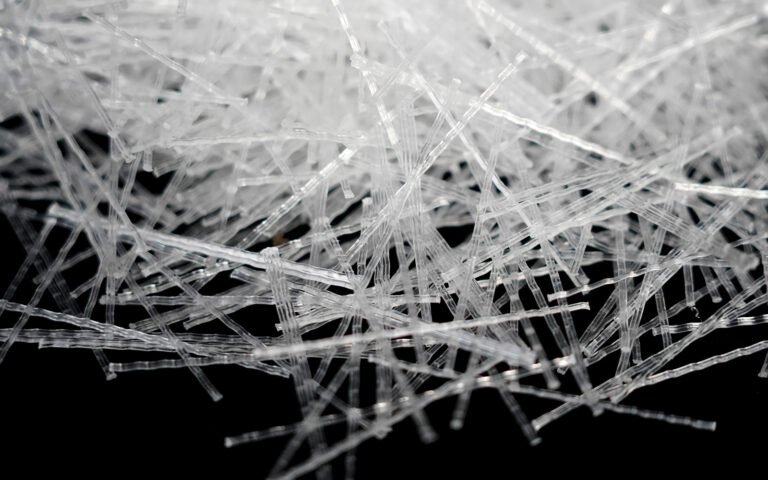
Steel Fiber vs. Synthetic Macrofiber: Key Differences
| Factor | स्टील फायबर | Synthetic Macrofiber |
|---|---|---|
| Material | Steel | Polymer, commonly polypropylene |
| Stiffness | Generally high | Depends on polymer and fiber design |
| Corrosion | Can corrode under suitable exposure conditions | Does not undergo electrochemical corrosion like steel |
| Crack bridging | Depends on anchorage, geometry, and dosage | Depends on geometry, bonding, and polymer properties |
| Post-cracking performance | Can provide residual strength and toughness | Can provide residual strength and toughness |
| Density | Higher | Generally lower |
| Surface considerations | Exposed steel fibers may require consideration | No exposed steel reinforcement elements |
| Common applications | Industrial floors, shotcrete, precast concrete | Industrial floors, pavements, shotcrete, selected concrete systems |
| Replacement potential | Depends on design requirements | May replace certain steel-fiber solutions when performance is verified |
Performance Factors That Matter
Post-Cracking Strength
Both steel fibers and synthetic macrofibers can bridge cracks and transfer stresses across them. Steel fibers generally benefit from steel’s high stiffness and the anchorage provided by their geometry. Synthetic macrofibers rely on polymer properties, fiber geometry, and interaction with the concrete matrix.
Compare residual flexural strength and toughness using relevant test data. ASTM C1609/C1609M provides a recognized method for evaluating the flexural performance of fiber-reinforced concrete.
क्षरण प्रतिरोधकता
Steel fibers may require additional consideration in environments involving moisture, chlorides, or other aggressive exposure conditions. Synthetic macrofibers avoid electrochemical corrosion of the fiber itself.
However, using a non-metallic fiber does not automatically guarantee better overall concrete durability. Concrete quality, polymer characteristics, temperature, and service conditions remain important.
Workability and Fiber Distribution
Both fiber types can affect slump, pumping, mixing, and finishing. Excessive dosage or unsuitable fiber geometry can cause dispersion problems or fiber balling.
Follow the manufacturer’s mixing recommendations and conduct trial batches when necessary. Avoid adding water indiscriminately to compensate for reduced workability, as this may compromise concrete performance.
Applications: Which Fiber Should You Choose?

Industrial concrete floors: Both fiber types may be suitable. Selection depends on loading, slab design, joint layout, residual-strength requirements, and surface-finish expectations.
Tunnels and shotcrete: Steel fiber and synthetic macrofiber can both be considered. The decision should reflect specified residual flexural performance, energy absorption, ground conditions, and installation requirements.
Pavements and external concrete: Exposure conditions, crack-control objectives, construction methods, and corrosion-related concerns influence material selection. Synthetic macrofiber may be appropriate where a non-metallic reinforcement system meets the required performance criteria.
Precast concrete: Steel fibers are used in many precast applications, while synthetic macrofibers may suit selected products. Manufacturing processes, demolding requirements, product geometry, and design specifications must be considered.
No single fiber type is optimal for every application. The selected product must satisfy the relevant engineering and project requirements.
Can Synthetic Macrofiber Replace Steel Fiber?
Yes, synthetic macrofiber can replace steel fiber in some applications, but not universally.
A substitution may be feasible when the synthetic macrofiber system achieves the required performance and receives the necessary engineering and project approval.
Potential reasons to consider polypropylene synthetic macrofiber include:
- Avoiding electrochemical corrosion of steel fibers.
- Reducing the introduction of metallic elements into concrete.
- Potentially simplifying certain handling and placement operations.
- Meeting specified post-cracking requirements with a polymer-based reinforcement system.
However, steel fiber and synthetic macrofiber differ in density, stiffness, geometry, and load-transfer behavior. Equal mass does not mean equivalent reinforcement, and dosage should never be converted on a one-to-one basis without technical justification.
Synthetic macrofiber should also not be assumed to replace reinforcing bars or welded-wire reinforcement in every structural application. Any substitution must comply with applicable design standards and project specifications.
How to Choose the Right Concrete Reinforcement Fiber
Before selecting a concrete reinforcement fiber, evaluate these five factors:
- Performance requirements: Define the required crack control, residual flexural strength, toughness, or energy absorption.
- Application and exposure: Consider floors, pavements, shotcrete, precast products, environmental exposure, and service conditions.
- Technical specifications: Compare fiber length, geometry, density, tensile properties, recommended dosage, and relevant test results.
- Concrete compatibility: Evaluate workability, mixing, pumping, placement, and finishing through appropriate trials.
- Supply and quality consistency: Review technical documentation, batch consistency, packaging, delivery reliability, and supplier support.
For commercial projects, select fiber based on verified performance in the intended concrete system rather than price per kilogram alone.
वारंवार विचारले जाणारे प्रश्न
Q1: Is synthetic macrofiber stronger than steel fiber?
Neither is universally stronger. Performance depends on material properties, fiber geometry, dosage, concrete composition, and the test method. Compare relevant residual-strength and toughness results.
Q2: Is polypropylene macrofiber the same as microfiber?
No. Polypropylene microfiber is primarily used to help control plastic shrinkage cracking, while polypropylene macrofiber is designed to contribute to the mechanical behavior of hardened concrete after cracking.
Q3: Can synthetic macrofiber be used in industrial floors?
Yes. It can be suitable when the selected product meets the required performance criteria and the floor design accounts for loading, joints, subgrade conditions, and other project requirements.
Q4: How much fiber should be added to concrete?
There is no universal dosage. The appropriate amount depends on the product, concrete mixture, application, and performance requirements. Follow the manufacturer’s technical recommendations and verify performance through testing.
निष्कर्ष
Steel fiber and synthetic macrofiber offer different approaches to concrete reinforcement. Steel fiber can provide high stiffness and effective anchorage, while polypropylene synthetic macrofiber offers a non-metallic option for suitable post-cracking reinforcement applications.
For engineers, contractors, and concrete producers, the right choice depends on verified performance, exposure conditions, mixture compatibility, and project specifications. Synthetic macrofiber can be a practical alternative to steel fiber in selected applications, but substitution must be supported by appropriate testing and engineering review.
Looking for Synthetic Macrofiber for Concrete?
Fiberego provides fiber solutions for concrete reinforcement applications. Contact Fiberego to discuss polypropylene synthetic macrofiber specifications, application suitability, and technical requirements for your next project.