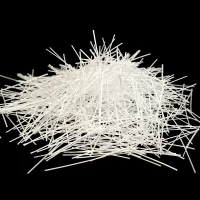
Steel fiber reinforced concrete (SFRC) is concrete reinforced with short steel fibers distributed throughout the mix. Compared with plain concrete, SFRC can improve crack control, toughness, impact resistance, flexural performance, and post-crack load capacity.
The performance of steel fiber reinforced concrete depends on more than simply adding steel fiber. Fiber type, steel fiber dosage, aspect ratio, tensile strength, aggregate grading, workability, and mixing method all affect the final result.
This guide covers steel fiber reinforced concrete mix design, steel fiber dosage, fiber types, selection factors, and major SFRC applications.
What Is Steel Fiber Reinforced Concrete?
Steel fiber reinforced concrete contains short steel fibers dispersed throughout the concrete matrix.
Unlike rebar or welded mesh, which reinforce concrete at fixed positions, steel fibers provide distributed reinforcement across the concrete volume.
When a crack begins to form, fibers crossing the crack can resist pull-out and transfer stress across the crack opening. This crack-bridging effect helps improve:
- Crack resistance
- Residual flexural strength
- Toughness
- Impact resistance
- Fatigue resistance
- Post-crack performance
For this reason, steel fiber concrete is widely used where concrete is exposed to heavy loads, impact, vibration, repeated traffic, or demanding service conditions.
Types of Steel Fiber for Concrete
Hooked End Steel Fiber
Hooked end steel fiber uses mechanically formed hooks at both ends to improve anchorage inside concrete.
The hooked ends increase resistance to fiber pull-out after cracking, making this fiber suitable for:
- Industrial flooring
- Warehouses
- Pavements
- Tunnel linings
- Precast concrete
- Bridge and infrastructure projects
Hooked end fibers are commonly selected when strong crack control and post-crack load capacity are required.
Glued Hooked End Steel Fiber
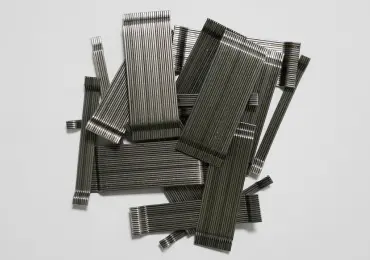
Glued hooked end steel fiber consists of fibers temporarily bonded into bundles.
The glue dissolves during wet mixing, allowing individual fibers to disperse throughout the concrete.
Glued fibers can improve feeding and reduce fiber balling, especially when longer fibers or higher dosages are used.
Fiberego supplies glued hooked end steel fibers in several lengths, including 35 mm, 45 mm, and 60 mm.
Brass Coated Micro Steel Fiber
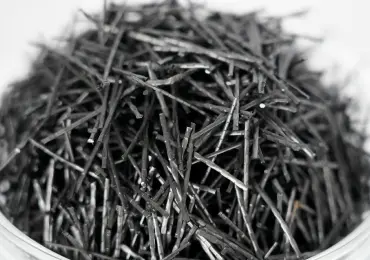
Brass coated micro steel fiber is a short, fine, high-strength steel fiber with a brass-coated surface. It is mainly used in dense, high-performance cementitious systems where high fiber density and strong bonding with the matrix are required.
Its small size allows more fibers to be distributed throughout the concrete, helping improve tensile performance, flexural strength, toughness, and crack control.
Brass coated micro steel fiber is commonly used in:
- UHPC
- High-performance concrete
- Thin precast elements
- Architectural concrete components
- Specialized cement-based composites
Fiberego supplies brass coated micro steel fibers in different lengths, including 6 mm and 12 mm options, for high-performance concrete applications.

Steel Fiber Reinforced Concrete Mix Design
Aggregate grading affects fiber dispersion.
Large or poorly graded aggregates can restrict fiber movement and increase the risk of uneven distribution.
A well-graded aggregate system helps fibers distribute more uniformly throughout the concrete.
Aggregate Grading
Aggregate grading affects fiber dispersion.
Large or poorly graded aggregates can restrict fiber movement and increase the risk of uneven distribution.
A well-graded aggregate system helps fibers distribute more uniformly throughout the concrete.
Paste Content
Adequate paste volume is important because cement paste must coat both aggregates and steel fibers.
Insufficient paste can make SFRC harsh, difficult to pump, and difficult to finish.
Water-Cement Ratio
Adding extra water only to improve workability can reduce concrete strength and durability.
Superplasticizers or water-reducing admixtures are usually more suitable for maintaining flow while preserving the designed water-cement ratio.
Fiber Length and Aspect Ratio
Steel fiber aspect ratio is commonly expressed as:
Aspect Ratio = Fiber Length / Fiber Diameter
Higher aspect ratios can improve reinforcement efficiency, but they can also reduce workability and increase the risk of fiber balling.
Fiber geometry must therefore be selected together with the concrete mix design.
Steel Fiber Dosage for Concrete
Steel fiber dosage for concrete is one of the most important SFRC design factors.
A common question is:
How Much Steel Fiber per m³ of Concrete?
There is no single dosage suitable for every project.
The required steel fiber dosage depends on:
- Fiber type
- Fiber length
- Fiber diameter
- Aspect ratio
- Tensile strength
- Concrete strength
- Required residual strength
- Loading conditions
- Slab thickness
- Aggregate grading
- Mixing and placing method
Industrial floors, tunnels, shotcrete, pavements, and precast concrete may all require different steel fiber contents.
Higher dosage does not automatically mean better performance. Excessive fiber content may reduce workability, increase mixing difficulty, and create uneven fiber distribution.
The correct dosage should be determined by structural requirements, fiber properties, concrete mix design, and trial mixing.
How to Choose Steel Fiber for Concrete
When selecting steel fiber for concrete, several technical parameters should be considered.
- Fiber Length
Longer fibers can bridge larger cracks and provide stronger mechanical anchorage.
However, long fibers may be more difficult to disperse in mixes containing large aggregates or limited paste.
- Fiber Diameter
Fiber diameter affects aspect ratio, fiber count per kilogram, and reinforcement distribution.
Finer fibers provide more individual fibers at the same weight, while thicker fibers may offer different pull-out and handling characteristics.
- Aspect Ratio
Aspect ratio directly affects fiber behavior.
A higher aspect ratio can increase crack-bridging efficiency, but very high ratios may reduce fresh concrete workability.
- Tensile Strength
Steel fiber tensile strength determines the fiber’s ability to resist stress before breaking.
High tensile strength is particularly important in demanding industrial, tunnel, infrastructure, and high-performance concrete applications.
- Fiber Geometry
Fiber shape affects bond and pull-out resistance.
Hooked end fibers provide mechanical anchorage, while micro fibers rely more heavily on high fiber count, bond, and matrix performance.
- Loose vs. Glued Steel Fiber
Loose steel fibers are suitable for many standard concrete mixes.
Glued fibers can improve dosing and dispersion when longer fibers or higher fiber contents are used.
The best option depends on the mixing system, dosage, and required performance.
Benefits of Steel Fiber Reinforced Concrete
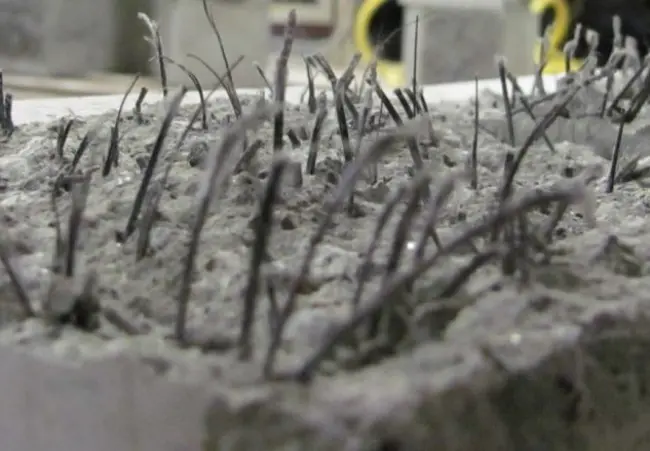
Steel fiber reinforced concrete is mainly used to improve crack control and post-crack performance.
Key benefits include:
- Improved Crack Control
Steel fibers bridge developing cracks and help limit crack opening.
- Higher Toughness
SFRC can absorb more energy before failure than plain concrete.
- Better Post-Crack Performance
Steel fibers can continue transferring stress after the concrete matrix cracks.
Improved Impact Resistance
Steel fiber concrete is suitable for areas exposed to repeated impact, heavy equipment, or dynamic loading.
- Improved Fatigue Resistance
SFRC can perform well in applications exposed to repeated loading, including industrial floors and pavements.
- Distributed Reinforcement
Steel fibers reinforce the concrete throughout the mix rather than only at specific reinforcement locations.
Steel Fiber Reinforced Concrete Applications
Industrial Flooring
Steel fiber for industrial flooring is widely used in warehouses, factories, logistics centers, and heavy-duty slabs.
The main objectives are crack control, toughness, load distribution, and resistance to repeated traffic.
Tunnels and Shotcrete
Steel fiber reinforced shotcrete is commonly used in tunnel and underground construction.
Steel fibers provide distributed reinforcement and help improve energy absorption and post-crack performance.
Pavements
Steel fiber concrete can be used in:
- Industrial pavements
- Heavy-duty roads
- Port areas
- Airport pavements
- Container yards
Fibers help improve toughness and crack control under repeated loading.
Precast Concrete
Steel fiber for precast concrete can improve crack resistance, handling performance, and production efficiency in suitable products.
UHPC
Micro steel fiber for UHPC is used to improve tensile strength, flexural strength, toughness, and post-crack behavior.
UHPC normally requires short, high-strength fibers that can disperse effectively in a dense cementitious matrix.
Steel Fiber Reinforced Concrete vs. Rebar
Steel fiber reinforced concrete and rebar perform different reinforcement functions.
Rebar provides continuous reinforcement in selected directions and locations.
Steel fibers provide distributed reinforcement throughout the concrete volume.
Depending on the structural design, steel fibers may:
- Supplement rebar
- Replace part of conventional reinforcement
- Replace mesh in certain slab systems
- Improve crack control around conventional reinforcement
Steel fiber should not automatically be treated as a direct replacement for structural reinforcement. The reinforcement system must match the project design.
Common SFRC Mixing Problems
- Fiber Balling
Fiber balling occurs when fibers collect together instead of dispersing uniformly.
Correct feeding sequence, appropriate dosage, and suitable mix proportions help reduce this problem.
- Low Workability
Steel fiber increases internal friction in fresh concrete.
Mix design and admixture dosage may need adjustment to maintain required slump or flow.
- Uneven Fiber Distribution
Poor feeding or insufficient mixing can create areas with different fiber concentrations.
Uniform distribution is essential for consistent SFRC performance.
- Incorrect Fiber Selection
Using the wrong fiber length, aspect ratio, or geometry can reduce performance and increase mixing difficulty.
Fiber selection should always match the application and concrete mix.
Choose the Right Steel Fiber Manufacturer
A reliable steel fiber manufacturer should provide consistent fiber dimensions, tensile strength, geometry, and production quality.
Fiberego manufactures steel fibers for concrete reinforcement, including:
These products are designed for applications such as industrial flooring, tunnels, shotcrete, pavements, precast concrete, infrastructure, and UHPC.
Fiberego also supports customers with steel fiber selection, dosage guidance, and concrete mix optimization.
For steel fiber reinforced concrete, performance depends on matching the right fiber type, dosage, and mix design to the actual project requirements.